
TASKA vs tadika: which arrangement suits your child?
Separate care stage, education setting, regulator, schedule and family logistics before comparing individual providers.
TASKA and tadika are not interchangeable labels for the same service. The child’s age or stage, care hours, programme and regulator shape which type of setting is relevant before a family compares price or facilities.
What the official sources establish
JKM is the official source for TASKA registration information, while the Ministry of Education provides private-education information relevant to kindergartens and other institutions. Verify the exact provider in the appropriate system.
What to check
- Child’s age, care needs and the provider type stated on its registration.
- Operating calendar, daily hours, meals, rest and extended-care arrangements.
- Programme, language, group arrangement and transition support.
- Transport, handover, emergency, fee, deposit and withdrawal terms.
A practical way to decide
- Identify whether the main need is full-day care, preschool education or a combined arrangement.
- Verify each provider through the regulator relevant to its claimed type.
- Compare one normal weekly schedule including travel and closures.
- Visit, read the written agreement and confirm the named branch before payment.
A useful decision rule
Choose the registered arrangement that fits the child’s current care and development needs and the family’s reliable schedule. The category comes before brand comparison.
Common mistake to avoid
Do not assume words such as nursery, preschool, daycare and kindergarten prove a particular registration. Ask for the formal provider type and verify it.
Keep the evidence
Save the dated product page, quotation or terms you relied on, together with receipts, model or registration numbers and written messages. Public pages and commercial terms can change; recheck the linked official sources before committing money or making a complaint.
Key takeaways
- Child’s age, care needs and the provider type stated on its registration.
- Operating calendar, daily hours, meals, rest and extended-care arrangements.
- Programme, language, group arrangement and transition support.
Related guides
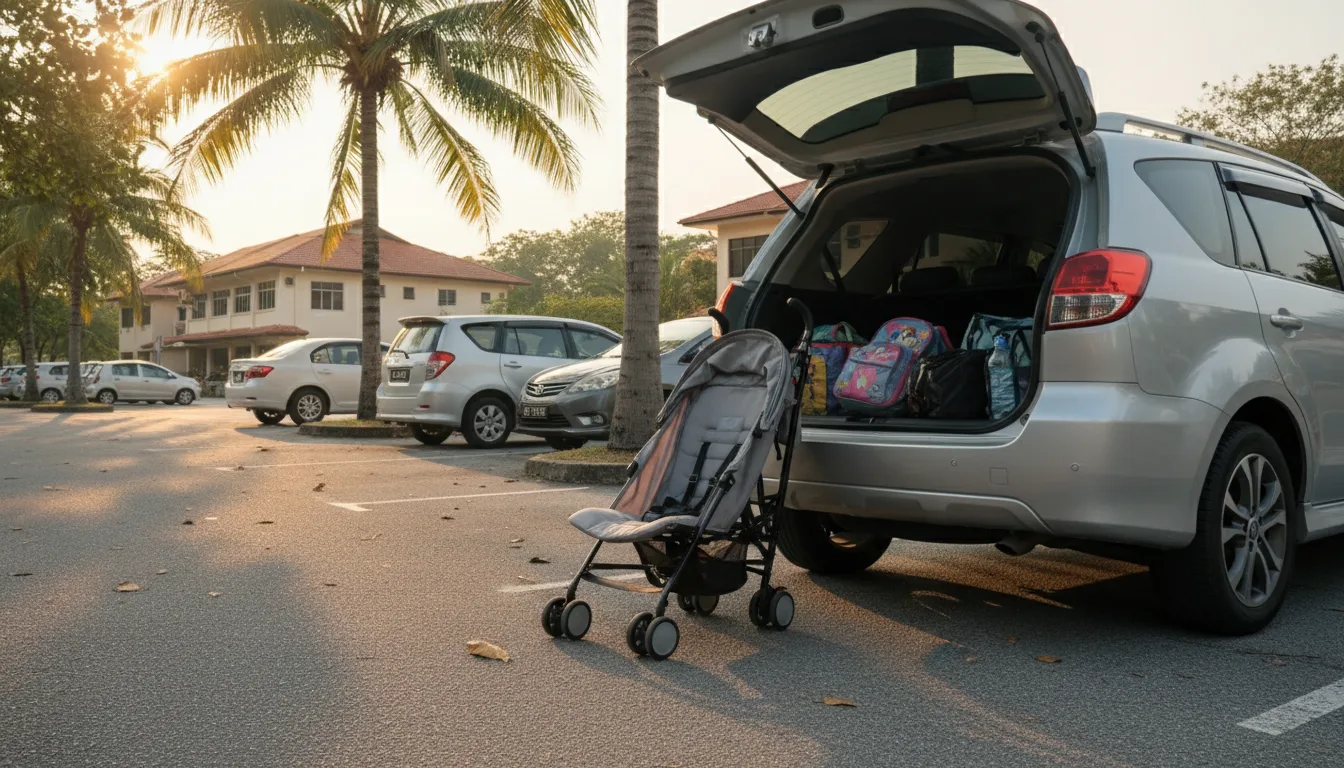
Lightweight vs full-size stroller for Malaysian families
A lightweight stroller is easier on stairs, in lifts and in a car boot; a full-size model normally gives stronger wheels, storage and all-day comfort. Compare folded dimensions and real carrying weight before features.

How to choose a child car seat in Malaysia
Choose a UN R44 or R129 approved restraint that fits the child, vehicle and every regular caregiver. Correct installation and daily harness use matter more than premium extras.

Baby monitor buying guide for Malaysian homes
Compare dedicated-parent-unit, Wi-Fi and hybrid monitors by connection, battery, night viewing, account security and what still works when the internet goes down. A monitor supports supervision; it does not make a sleep setup safe.

First antenatal visit checklist in Malaysia
Prepare dates, health history, medicines, previous records and practical questions for early pregnancy care without turning a checklist into personal medical advice.