
Whey vs plant protein powder: how to choose
Whey is naturally rich in essential amino acids and mixes easily; plant powders can support protein intake when the serving provides enough protein and amino acids. Diet, tolerance, dose and product registration matter more than the front-label category.
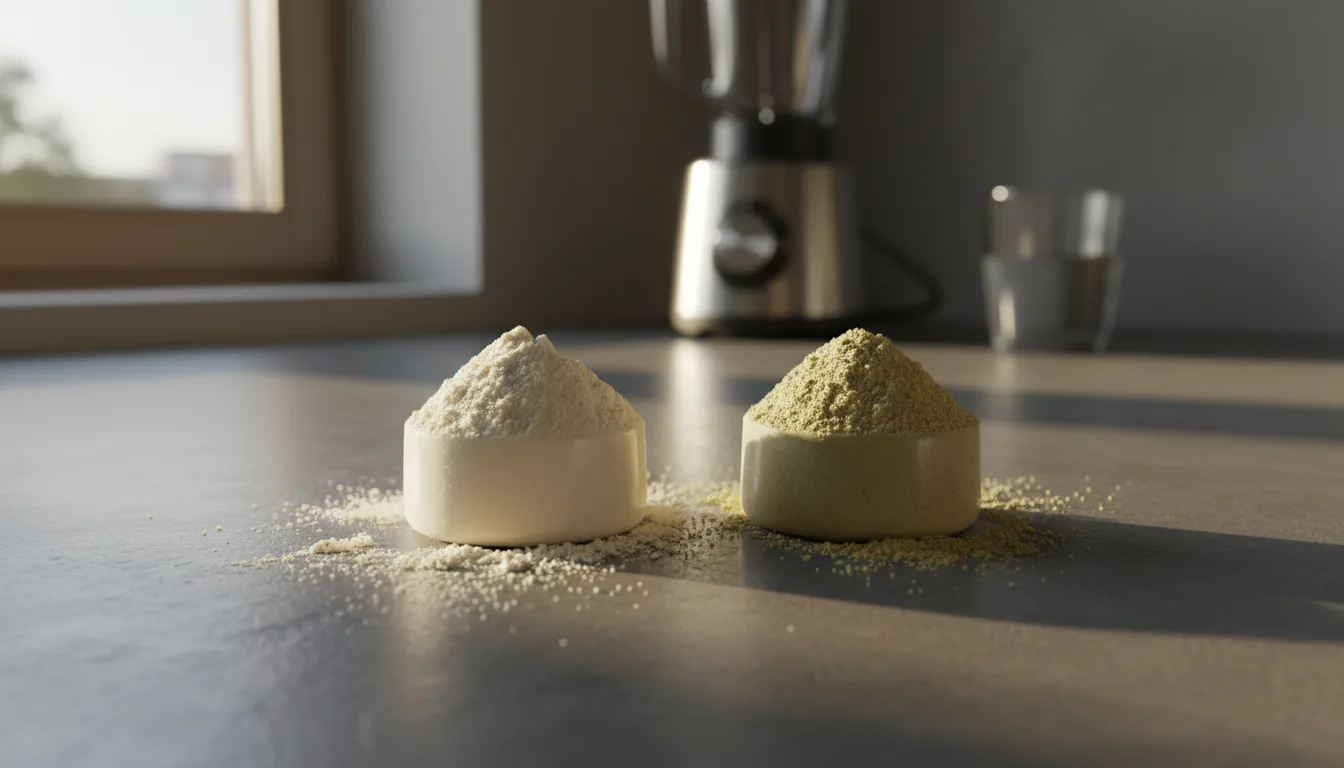
Protein powder is a convenience food, not a requirement for building muscle or eating well. Most people should first estimate total dietary protein with a qualified professional when health conditions, pregnancy, allergy, disordered eating or kidney concerns are involved.
Compare products per serving and per 25g of protein, not per scoop: scoop sizes, flavouring and protein concentration differ.
Quick verdict
Choose whey if dairy suits you and you want a compact serving with a strong essential-amino-acid profile. Choose a plant blend if you avoid dairy, but compare protein, leucine or essential amino acids, digestibility and serving size. Either can support training when total diet and dose are adequate.
At a glance
| Whey protein | Plant protein | |
|---|---|---|
| Source | Milk-derived | Pea, soy, rice or blends |
| Amino-acid profile | Naturally high in essential amino acids | Varies; blends or fortification can improve balance |
| Lactose | Concentrate contains more; isolate usually less | No dairy lactose |
| Serving size | Often smaller for a given protein dose | May require a larger serving |
| Diet fit | Not vegan; milk allergen | Can suit vegan diets; other allergens still possible |
What each option is
Whey protein. A milk-derived protein sold mainly as concentrate, isolate or hydrolysate. These differ in processing, protein concentration, lactose and price.
Plant protein. Protein isolated or concentrated from plants such as soy, pea or rice. A blend can complement amino-acid profiles; formulation varies substantially.
Category by category
Evidence
Recent small controlled trials found that appropriately formulated or leucine-matched plant proteins can stimulate post-exercise muscle protein synthesis similarly to whey in studied settings. That does not prove every plant powder is equivalent at every dose or for every person.
Tolerance
Whey concentrate may bother people sensitive to lactose, while milk allergy is a separate issue. Plant products can contain soy, sweeteners, gums or ingredients that also affect tolerance.
Label check
Compare grams of protein, serving size, ingredient order, allergens, sugar and sodium. In Malaysia, also verify the applicable NPRA product-registration status rather than trusting marketplace claims.
Cost
Calculate RM per 25g of protein using the number of real servings. A cheaper tub can cost more per useful protein dose if each serving is small.
Environmental or ethical preferences
Plant products avoid dairy, while sourcing and processing differ by ingredient and company. Treat broad sustainability claims as claims that need their own evidence.
Who each suits
Cost & availability in Malaysia
Prices vary by tub size and promotion. Compare cost per protein dose, not cost per kilogram of powder. Avoid unregistered products, broken seals and sellers that cannot provide a Malaysian registration number or traceable invoice.
Our recommendation
Choose the product you tolerate, can verify and will consistently use—if you need one at all. Whey is the simpler benchmark; a well-formulated plant product can be a practical alternative when the total protein and essential-amino-acid delivery are adequate.
Related guides
How to choose a home blood-pressure monitor in Malaysia
Choose a validated automatic upper-arm monitor with a cuff that fits, then confirm the exact model in Malaysia’s medical-device register. Memory and Bluetooth are useful only after fit and validation are right.

What to check before buying a supplement in Malaysia
Verify the exact product in NPRA’s search, match the MAL registration number to the name and holder, inspect the seal and seller, then assess whether the claim and dose make sense for you.

How to compare aesthetic clinics responsibly in Malaysia
Verify the doctor in the MMC register and the Ministry of Health aesthetic-practice registry, then ask who performs the procedure, which product or device is used, what complications can occur and how follow-up works.
How to check a cosmetic notification in Malaysia
Match the exact product and notification holder in NPRA’s search, then assess the label and know where to report a suspected problem.