
Latex vs memory foam mattress: which feel suits you?
Latex tends to feel springier and easier to move on; memory foam contours more slowly and usually isolates movement well. Material labels alone do not reveal firmness, layer thickness, heat management or durability.
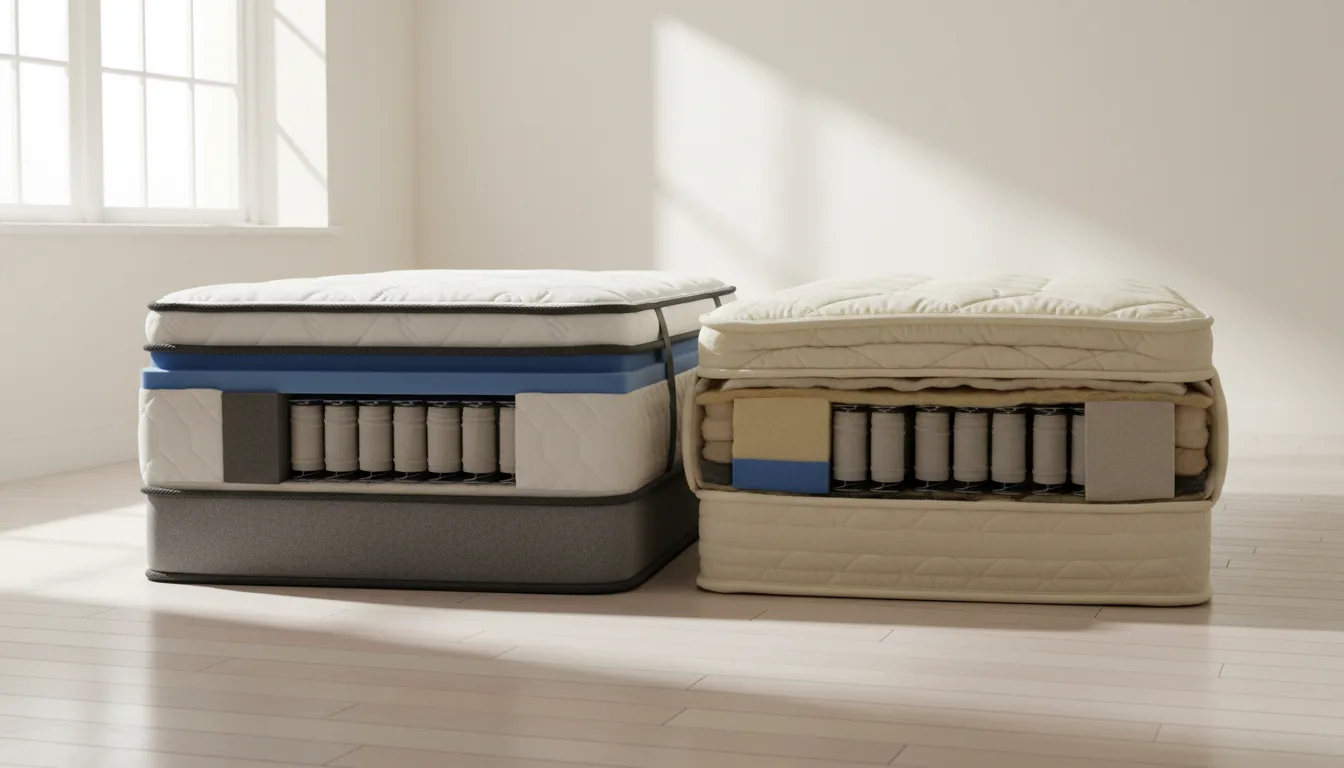
A mattress described as “latex” or “memory foam” may contain only a comfort layer of that material over springs or other foams. Ask for the layer construction, thickness and material type for the exact size and model.
Comfort is personal. Use a showroom trial or a clearly documented home-trial policy, and read what happens to transport fees, opened products and refunds before ordering.
Quick verdict
Choose latex if you prefer quick response, easier movement and a buoyant surface. Choose memory foam if close contouring and motion isolation matter more. Neither material is automatically cooler, firmer or more durable without knowing the full construction.
At a glance
| Latex | Memory foam | |
|---|---|---|
| Response | Returns to shape quickly | Slow, body-contouring response |
| Movement | Easier to turn on | Can feel more enveloping |
| Motion transfer | Good, varies by build | Often very good |
| Weight | Usually heavy | Also heavy at higher density |
| Heat feel | Often more open and responsive | Can feel warmer; design matters |
What each option is
Latex. Foam made from natural rubber latex, synthetic latex or a blend. It may form the whole core or one layer in a hybrid mattress.
Memory foam. Viscoelastic polyurethane foam that softens with heat and pressure. Density, firmness, thickness and the layers beneath it change the feel substantially.
Category by category
What the label really means
Ask whether the mattress is all-latex, a latex hybrid, or only latex-topped. For memory foam, ask the comfort-layer thickness and density rather than accepting a generic “premium foam” description.
Malaysian heat and humidity
Latex commonly feels less enveloping, which some hot sleepers prefer. Covers, ventilation, protector choice, room conditions and the layer stack can matter as much as the foam name.
Support and comfort
Neither material guarantees back-pain relief. Firmness, body mass, sleeping position and the support core determine alignment. Treat medical claims cautiously.
Care and lifespan
Follow the maker’s foundation, rotation and ventilation instructions. Getha’s own warranty notes that natural latex softens over its useful life and warns against direct heat and sunlight.
Returns and warranties
A long warranty may cover manufacturing defects or specified indentations, not normal softening or a subjective dislike of the feel. Read exclusions and transport costs.
Who each suits
Cost & availability in Malaysia
Both materials are widely sold in Malaysia, from compressed online mattresses to high-priced showroom models. Compare the delivered price for the same size, including old-mattress removal, stairs or lift restrictions, trial-return transport and the required bed base.
Our recommendation
Pick by feel and disclosed construction, not material prestige. Spend at least 10–15 minutes in your normal sleeping positions, check the written trial and warranty, and reject vague specifications.
Related guides
How to choose a renovation contractor in Malaysia
A practical due-diligence process for checking CIDB registration, comparing itemised quotations, defining variations and tying payments to visible progress before work begins.

CCTV vs smart doorbell: what coverage do you need?
A smart doorbell watches one approach and makes visitor conversations easy. A multi-camera system covers more angles and can record locally, but installation, maintenance and privacy responsibilities are greater.
How to read a renovation quotation before you sign
Turn a lump-sum renovation quote into a checkable scope covering quantities, materials, approvals, variations, payments and handover.
How to check a mattress trial, warranty and care terms
Read the exclusions, measurement rules, return logistics and support requirements before relying on a long trial or warranty headline.